 (719) 291-4615
Why LVP Flooring Holds Up in Colorado's Dry Climate

If you've owned hardwood in Colorado, you already know the sound. That little crack and pop in winter when the air dries out and the boards shrink. Our climate is brutal on natural flooring. Low humidity, big temperature swings, and dry heat pull moisture out of wood and leave you with gaps, cupping, and squeaks. That's a big reason luxury vinyl plank has taken over so many of the homes I work in.
What LVP is, in plain terms
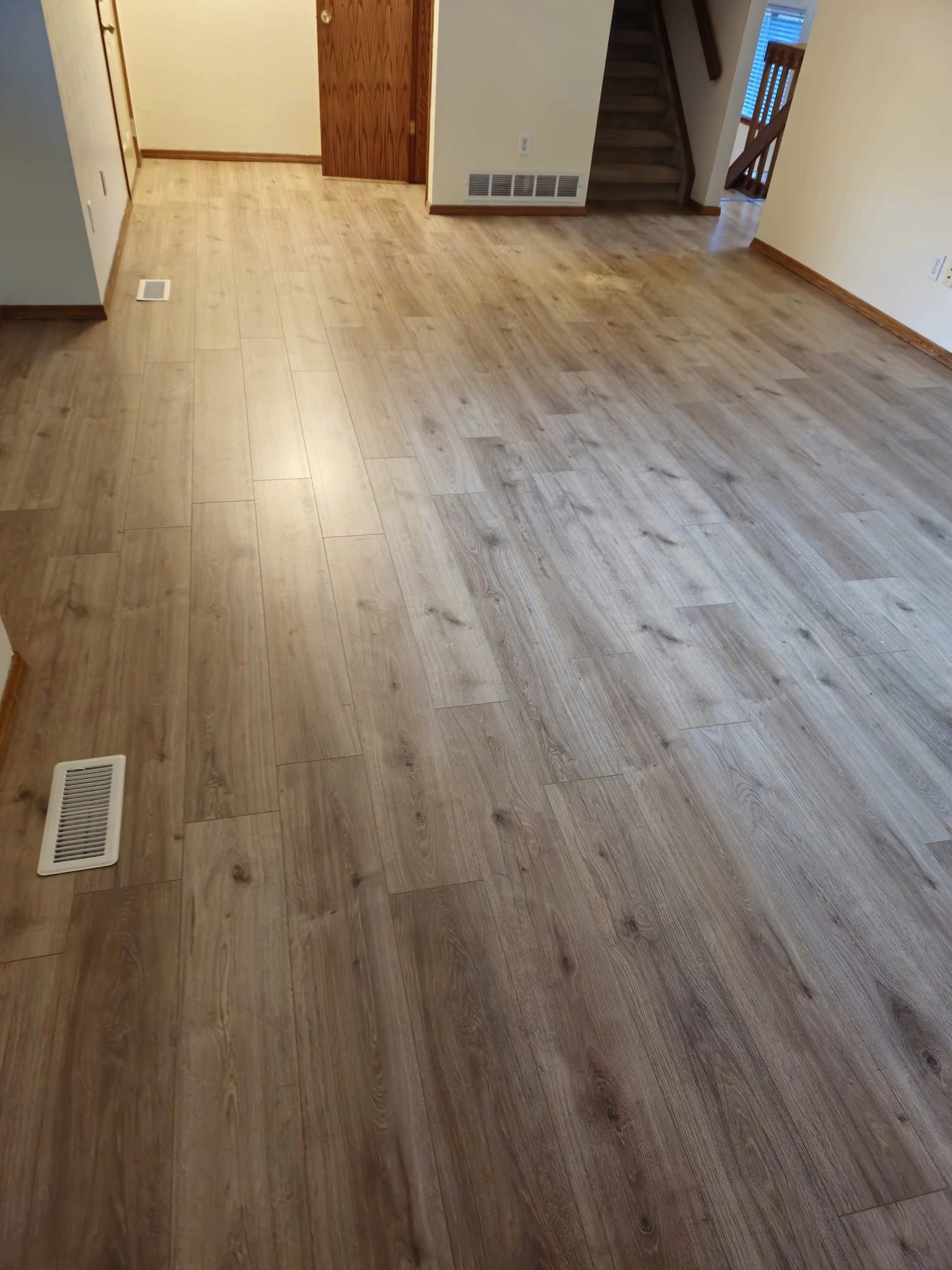
Luxury vinyl plank is a rigid, multi-layer floor that looks like wood but doesn't behave like it. The good stuff has a tough wear layer on top, a printed layer that mimics real oak or walnut, and a stable core underneath. It clicks together and floats over your subfloor. From standing height, most people can't tell it from real wood. Underfoot and over time, it behaves a lot better in our climate.
Why it works so well at altitude
Here's the short version of why I recommend it up here:
- It shrugs off dry air. Wood moves with humidity. LVP barely notices, so you skip the winter gapping that plagues hardwood in Colorado Springs and the Tri-Lakes.
- It handles temperature swings. A quality rigid-core plank stays stable when a room goes from cold morning to hot afternoon sun.
- It's waterproof. Spills, mopping, snowy boots by the door, none of it fazes a proper LVP floor. That makes it great for kitchens, baths, and basements.
- It's tough on daily life. Kids, dogs, and dragged furniture. The wear layer takes it.
Installation is where floors are won or lost
This is the part people underestimate. A great plank installed poorly is still a bad floor. The failures I get called to fix almost always trace back to prep, so we don't rush it:
- The subfloor gets flat and clean. Dips and bumps telegraph through the plank and cause flex and clicking.
- We leave the right expansion gap. Even rigid-core moves a little. Skip the gap at the walls and the floor can buckle when it warms up.
- We plan the layout. Where the planks start, how they run toward the light, how they meet the doorways. Little decisions that make the finished floor look intentional.
Do those three things right and the floor stays flat, quiet, and tight for years.
Is it right for every room?
Close. LVP is my go-to for main living areas, kitchens, bathrooms, and basements. Some folks still want real tile in a shower or a high-end primary bath, and that's a conversation worth having. For most of the house, though, LVP gives you the wood look without the wood headaches. If you're weighing options, the services page covers what we install.
Ready to replace that tired carpet?
A lot of my flooring jobs start the same way. Someone finally rips out the old carpet and can't believe the difference. If that's you, let's talk about what would look best in your space and your climate. Get a free quote and we'll get your floors sorted.